This conversation with German composer and organist Eva-Maria Houben started with a single question. It draws upon her exploration of the pipe organ, and her ideas about different ways of creating and experiencing a musical space. The interview is prepared and edited by Sasha Elina.
What is space in music?
I thought about this question a lot. For me, the distinction between space within music and within our surroundings cannot be strict. They are two different things, but I don’t see them as separate. When only two musicians are playing in a performance room, sitting side by side, they create a space. Even a very minimal one, there is still a space between them, and you can hear that they are not one. There is a suggested space in music and in our surroundings – be it our living room, or a performance room. Every performance room influences that suggested space, that imagined space, a space you can listen to. It has consequences for music, for constellations of sounds – how they develop and how they interact. You can hear these consequences, often without being able to say what exactly you are hearing. It is especially clear with the reverberation of a church, when an echo comes back to you while playing. And with the difference in how long it might take for a sound to decay, to vanish. For example, in a dry room sound might need only a second to disperse – in a large church it sometimes needs thirty seconds.
I also think that the postures of the performers, their behaviour while playing, have a great influence on the sound that you hear, both in a performance and in a recording. I know a performance of Beethoven’s Fifth Symphony where musicians are playing standing up, without chairs, and by heart. It gives quite a unique sound, and I describe this example in my book Musical Practice as a Form of Life. I compose performers’ movements and attitudes which are tender, soft, and full of devotion. The sounds become ways of transporting these delicate movements and attitudes.
In music, outer space and inner space have a deep connection. A musicologist might distinguish them by terms, but in reality, they are strongly connected. Another space that’s important is the space of the imagination. The imagination of the composer, the performers, and the audience – they all participate in the creation of that imagined space. I often describe it as the feeling of solitude in a wide, forlorn landscape. This is a situation imagined in my mind as a composer. Sometimes I include a text that describes a certain situation, sometimes a performance space as well. Because if a performer plays alone, I want to situate them alone in that space – even when others are participating, that player is independent from them. These descriptions can affect the emotions and imagination of the performers, which then affects the sounds.

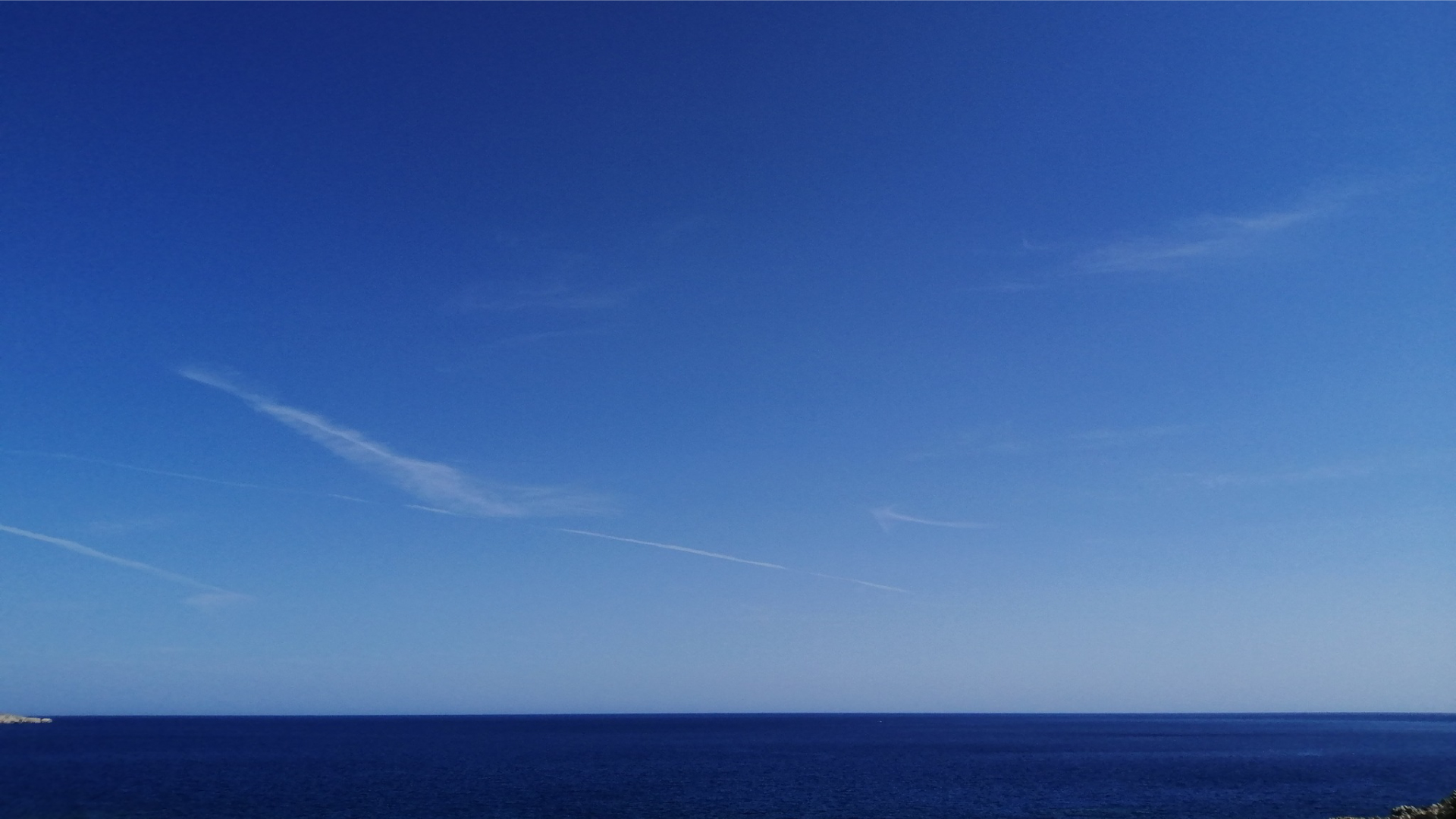
Music can invite many surrounding events and sounds to come in. My music is never disturbed by external sounds, even any kind of accidents. Music has a cocoon, it has its own existence, and all the other things can come and go without disturbing it. I think that every piece has its own space, but what is particular to my approach is that I always want to create a wide space that will allow many things within it. This also has to do with our own breath. When we experience fear, for example, our breathing concentrates in the upper part of the body. As soon as I am in a wide space – for example, standing and watching the ocean – I can breathe again. I would like my pieces to allow this kind of breath, the feeling of wideness of the universe.
I focus a lot on the materials of instruments. My main instruments, which I play myself, are piano and organ, and I’ve written many pieces for both. I always try to get to know more about the instrument, otherwise I cannot compose. The special aspect of the organ is that it can have a nearly eternal breath. You can put a weight on the key, leave the situation, leave the space, and the sound will continue. This is realised in Halberstadt with the organ performance of John Cage’s As Slow as Possible. You cannot do this with any other instrument, but the organ allows this continuous sound. In former times people had to pump the bellows, but with a modern electric blower you can have an endless breathing. One cannot deny that the organ is a kind of machine. But that doesn’t repel me, I love that the organ is a machine, because it allows us to achieve things we could never achieve otherwise.
I wanted to compose pieces with very long sounds, and I did it in my series of pieces for organ abhanden. méditations sur l’orgue. But the durations are not particularly long there. The organ installation is the only piece of mine that realises very long durations. In a wide church space, you can celebrate the wonderful moments of decay, when the sound is suddenly no longer there, it has vanished, or is fading away very slowly. One sound comes, the other departs, something new is added, and so on. The situation is always changing, and you can observe it with your ears – an always-changing object, which is of course not really an object but simply air. It is like an aeolian harp in the ocean, with the wind going through it, for days and days. For me, the organ becomes an aeolian harp.

In the organ installation the aspect of the instrument being a machine is emphasised. It is a breathing machine. The old question in music, whether it is possible to create sound that stays and doesn’t go away, is brought into foreground in the organ installation. It is like a piece in augmentation. It escapes the dimensions of a piece through its duration. Like the eternal Dream House by La Monte Young and Marian Zazeela, or Morton Feldman’s very long pieces, lasting 3 or 4 hours. Some criticise the Halberstadt performance of John Cage, saying he would never have liked it, and that it is not a valid realisation of the piece As Slow as Possible. But others say we can interpret it in this way, as a very long piece. It passes the border between being a piece and no-piece. This border is important in my music, with the distinction lying in our imagination. My pieces never have an end, I never have a conclusion, or a final aim. It is always a suggestion – you may end here, or you may end there. As if it had begun a million years before and could go on forever. There is no eternal sound, and if there were we would never be able to listen to it. We must remember that we enter a utopian region here, but I think it is important for art to enter it. That is where my fascination with organ installations lies.
I dive so deeply into listening that I can lose myself. It is a precious experience when I practice for an organ concert. Let’s say, I am in a church, and I have a recital the next day, so I am left alone, and I start practicing at 10am. At some point I wake up from it and realise that it is already 5pm – without having had food or drink, or a toilet break. The body switched off. I have a similar experience when I’m at the ocean. I’m walking there, and I’m looking for shells, and I notice some unusual stones, and then I see a ship passing. Then I want to get into the shade because the sun is so hot, and then I feel the wind, which is very nice in the trees, and so on, and so on… I don’t have a watch, but I know I should go back because it’s getting a bit dark. When I come back, I see that it is 7pm. This is what I mean by “losing myself”.
I think that a human being that never loses themselves can get depressed and struggle mentally. Sometimes, not always, we need to leave it all, to give in to getting lost. Nothing counts, nothing is worth keeping, we open our hands, our fists become loose, and we can breathe, and even our own bodies don’t care. That is deep listening. I think that sometimes we should allow ourselves to have some time for “boredom”. When we have nothing to do, just looking into the garden. The time goes by, and we didn’t achieve anything. If you feel you always must be achieving something, you’ll go mad. In the worst form, in the situation of war, you can never find an opportunity to get lost. You must be ever ready, listening out for sirens and bombardment… You can never allow yourself to get lost because you are in a state of constant attention, and that is traumatising. In our everyday lives we are somewhere in the middle. Getting lost is one of the aspects of experiencing the organ installation. I don’t tell listeners how long they should experience it for. They are simply there, like a flower, or a stone. And that is what counts.

Listen:
1. Toccata et Fuga (celebrating our disorientation) (2023)
2. Breath For Organ (2018)
3. abhanden (méditations sur l’orgue 11) (2023)
Linked event: Hazy Horizons